
Search for peptides for weight loss and you will find a confusing mix of FDA-approved medications and unregulated compounds promising the same results. Sorting the proven from the hype is the difference between real, safe results and wasting money on something that does nothing, or worse.
The good news is that the most effective peptides for weight loss are also the most studied and the most legitimate. This guide explains which peptides actually work, which are still in development, and which to avoid entirely.
The Most Effective Peptides for Weight Loss Are Already Approved
Here is the headline most people miss. The best peptides for weight loss are the GLP-1 medications you have already heard of.
As GoodRx outlines, there are several FDA-approved peptide medications for weight management, led by semaglutide and tirzepatide. These are peptides, short amino acid chains engineered to mimic gut hormones. If that surprises you, our guide on GLP-1 vs peptides explains why GLP-1 drugs and peptides are not two separate things.
In other words, the proven answer to peptides for weight loss has been hiding in plain sight under the name GLP-1.
How Well Do the Approved Peptides Work?
The trial results are why these medications transformed obesity treatment.
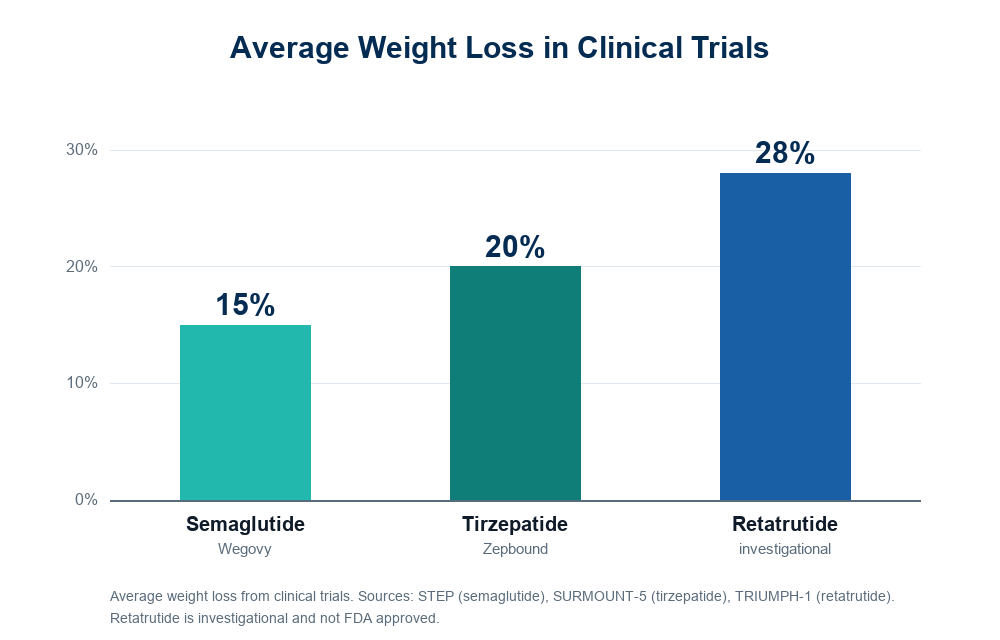
Semaglutide, the peptide in Wegovy and Ozempic, produces roughly 15% average body weight loss over about 68 weeks in clinical trials, as documented in NIH reference material. Tirzepatide, the peptide in Zepbound and Mounjaro, goes further, with around 20% or more in head-to-head data.
A systematic review and meta-analysis confirmed that tirzepatide consistently outperforms semaglutide on weight loss. For a full comparison of these two, see our Ozempic vs Mounjaro guide.
| Peptide | Brand names | Status | Average trial weight loss |
|---|---|---|---|
| Semaglutide | Wegovy, Ozempic | FDA approved | ~15% |
| Tirzepatide | Zepbound, Mounjaro | FDA approved | ~20% or more |
| Retatrutide | None yet | Investigational | Up to ~28% (phase 3) |
The Next Generation: Retatrutide
The most exciting peptide for weight loss is not available yet, but it is worth understanding.
Retatrutide is an investigational triple-agonist peptide. In its phase 2 NEJM trial, the highest dose produced 24.2% average weight loss at 48 weeks, and phase 3 data pushed that toward 28%. That leads all current options.
The catch is availability. As of mid-2026, retatrutide is not approved and not legitimately available. We cover it fully in our retatrutide guide, including the important warning about gray-market products sold under its name.
What About BPC-157 and Other Peptides?
This is where a lot of money gets wasted. Many peptides marketed in the same online spaces as weight loss compounds are not weight loss drugs at all.
BPC-157 and TB-500 are recovery peptides aimed at tissue healing. CJC-1295 and ipamorelin target growth hormone. None of these produce meaningful weight loss, and there is no good evidence supporting them for that purpose.
Worse, they are unapproved compounds, mostly sold for research use only, with their own safety and legal concerns. Buying them expecting weight loss results is a mistake on both effectiveness and safety.
What to Avoid
The single biggest pitfall is the gray market. A search for peptides for weight loss will surface countless sites selling unregulated injectable peptides, including knockoff versions of semaglutide, tirzepatide, and retatrutide.
These products are not FDA approved, may not contain what the label claims, and can be contaminated or incorrectly dosed. The risk is real and entirely avoidable. The proven peptides for weight loss are available as approved medications through a healthcare provider, with quality control and medical supervision behind them.
The Bottom Line
The most effective peptides for weight loss are the approved GLP-1 medications, semaglutide and tirzepatide, with retatrutide leading trials but not yet available. Recovery peptides like BPC-157 are not weight loss drugs, and gray-market products are best avoided entirely.
If weight loss is your goal, start with proven, approved options and the fundamentals. Our GLP-1 vs peptides guide puts the whole landscape in context, and our guide on what to eat on a GLP-1 covers the nutrition that makes treatment work. Always make these decisions with a qualified healthcare provider.